



Sustainable Finance
View more 


Financial Inclusion has remained at the forefront of the State Bank of Pakistan’s policy framework for achieving sustainable growth and inclusive development. It is among the key mandates of SBP under section 4(C) of the SBP Act 1956 (as amended up-to 28th January 2022). It is also among SBP’s strategic priorities as set out in SBP Vision 2028.
It includes promoting access to banking services, gender mainstreaming, housing finance, SME finance, agricultural credit, sustainable finance and other priority areas.
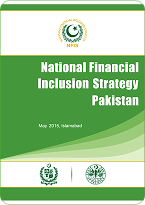
SBP has advanced financial inclusion through a series of national strategies. The journey began with the NFIS 2015–20, which laid the foundation for expanding access to formal financial services. This was followed by the NFIS 2018–23, which strengthened digital finance, broadened access points, and introduced targeted measures for women, SMEs, and rural populations.
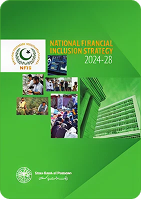
SBP is now implementing the NFIS 2024–28, a refreshed and forward-looking strategy that prioritizes digital financial inclusion, women’s financial empowerment, innovative financial solutions, and responsible finance. The current strategy reflects emerging market needs and places strong emphasis on creating a more inclusive, technology-enabled, and resilient financial ecosystem. These strategies can be accessed through following links
The SBP is committed to building a robust, innovative, and inclusive financial ecosystem by addressing structural bottlenecks and strengthening market infrastructure. Through targeted policy interventions and digital public goods,the SBP aims to expand access, enhance efficiency, and promote competition within the financial sector. These initiatives collectively support greater financial inclusion, especially for underserved communities, and enable the industry to adopt scalable, technology-driven solutions.
The Asaan Mobile Account (AMA) Scheme is a flagship digital access initiative that simplifies account opening for unbanked individuals using basic mobile phones, without requiring internet connectivity. By enabling interoperable account opening across participating banks and MNOs, AMA significantly expands digital access points and empowers low-income and remote populations to enter the formal financial system with ease. For further details, please follow the link:
The Zarkhez-e Portal is a centralized digital platform designed to modernize agricultural finance by offering transparent, real-time access to credit schemes, data, and resources for farmers and financial institutions. By improving information flow and streamlining processes, the portal strengthens risk assessment, enhances credit visibility, and supports evidence-based policymaking—ultimately boosting rural financial inclusion and agricultural productivity. For further details, please follow the link:
Pakistan is among the top 10 countries worst affected by climate change, experiencing unprecedented torrential rains, glacial melt, river flooding, and sudden heatwaves. These events have caused extensive losses to livelihoods, crops, infrastructure, and communication networks, while also undermining energy and food security. In response to the growing economic and social impacts of climate change, SBP has identified “Climate Change” as one of the four cross-cutting themes under SBP Vision 2028 and is strengthening its focus on climate-vulnerable segments of the financial sector. Through enhanced access to finance, improved infrastructure, and the promotion of sustainable finance, SBP aims to support resilience—particularly in addressing food and water security challenges. SBP also plans to pursue proactive policy measures to help financial sector stakeholders manage climate-related requirements and challenges, strengthen regulatory and supervisory frameworks to reduce climate risks, and channel resources toward a more sustainable, dynamic, and green economy.
With a view to promote affordable housing finance, the Government of Pakistan has introduced a Markup Subsidy and Risk Sharing Scheme namely ‘Mera Ghar - Mera Ashiana’.
State Bank of Pakistan offers a range of incentive schemes to foster inclusive, sustainable, and broad-based economic growth by enhancing access to finance for priority sectors. These schemes support SMEs, housing finance, sustainable and green finance, and export finance through concessional financing facilities, risk-sharing mechanisms, and targeted policy measures. This webpage serves as a centralized repository of SBP’s key circulars and related instructions on incentive schemes, facilitating stakeholders in accessing relevant guidance, understanding applicable policy provisions, and navigating the regulatory framework with ease.
SBP promotes financial literacy as a core enabler of financial inclusion. Through nationwide awareness campaigns, school-based programs, digital learning tools, and stakeholder partnerships, SBP works to equip individuals—especially women, youth, and low-income groups—with the knowledge and confidence needed to access formal financial services, make informed financial decisions and responsibly use financial services to fulfill their financial needs.
SBP has recently launched the first financial literacy strategy titled National Financial Education Roadmap 2025-29, a comprehensive framework designed to enhance financial literacy and consumer capability across Pakistan. It outlines priority actions and collaborative mechanisms to institutionalize financial literacy and promote informed, responsible financial behaviour nationwide. The National Financial Education roadmap can be accessed through following link:
For specific programs/initiatives, please follow the below links:
SBP plays a central role in designing and implementing innovative solutions under programs funded by international financial institutions through bilateral and multilateral arrangements. Institutions such as the Asian Development Bank (ADB) and World Bank have been instrumental in advancing financial inclusion, strengthening market infrastructure and supporting climate resilient development in Pakistan. Through these partnerships, SBP has expanded digital payment ecosystems, developed credit guarantee schemes, institutional strengthening, and piloted climate smart agriculture financing. Foundational programs such as ADB’s Microfinance Sector Development Program and Rural Finance Sector Development Program strengthened microfinance institutions, rural finance capacity, risk mitigation and depositor protection. Subsequent initiatives, including the Improving Access to Financial Services Program and the World Bank’s FIIP further enhanced liquidity, financial literacy, and institutional capability. Recent programs such as ADB’s Women Inclusive Finance Program and the World Bank’s Climate Risk Fund introduce gender responsive and climate adaptive financing. Collectively, these initiatives support Pakistan’s transition toward a resilient, inclusive, and sustainable financial system. Details of the programs can be accessed by the following link: